What You’ll Learn
- How lead generation works and why it matters for B2B and B2C businesses
- The difference between inbound and outbound lead generation strategies
- How to create campaigns using landing pages, email marketing, gated content, paid search, and remarketing
- How to improve lead quality by targeting the right audience and qualifying prospects
- How to measure lead generation performance and identify areas for improvement
Editor's Note: This post was originally published in July 2023 and has been updated with new content in August 2026.
Whether you’re a B2C or B2B business, lead generation is one of the biggest keys to success. Gone are the days of only resorting to cold calling prospective customers to try to sell them your product or service. Over the past decade, several lead generation tools and techniques have emerged, making it easier for businesses to capture new leads. Learn more about 5 creative lead generation ideas that can help your marketing campaigns in this blog.
What is Lead Generation?
Lead generation is a vital component of business growth in the digital era. Utilizing innovative tactics and powerful tools, businesses can attract potential leads and convert them into valuable customers. By leveraging content marketing, social media platforms, lead generation landing pages, email marketing, gated content, PPC advertising, and remarketing, businesses can optimize their lead generation efforts. With high-quality content, personalized email campaigns, and targeted ads, businesses can capture the attention of potential leads and guide them through the customer journey.
By implementing these strategies and techniques, businesses can maximize their online presence, generate qualified leads, and drive overall business success. Lead generation services provide businesses with effective strategies and tools to generate qualified leads. These services offer a range of lead generation examples, showcasing successful campaigns and tactics employed by various industries. Whether it's through content marketing, social media engagement, or targeted advertising, these lead generation ideas aim to maximize lead acquisition and conversion rates for businesses.
A solid lead generation approach combines multiple tactics, such as offering gated content, using lead gen tools, and developing a structured lead nurturing sequence to convert leads into customers.
Lead generation is not only about getting more leads. It is about attracting people who are more likely to become customers. Understanding your audience, their challenges, and where they search for solutions helps you create campaigns that generate better opportunities.
What is the Lead Generation Process and How Does it Work?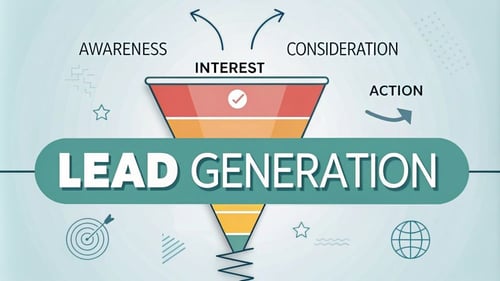
To develop a lead generation process, businesses must identify their ideal customers, create engaging content, and nurture leads through targeted outreach. This process typically involves inbound marketing (SEO, blogs, webinars) and outbound marketing (cold emails, paid ads, direct mail).
A strong targeted lead generation approach also uses criteria such as industry, company size, job role, and buying intent to focus outreach on prospects who are more likely to become customers.
Leads can be classified into marketing-qualified leads (MQLs) and sales-qualified leads (SQLs), depending on their readiness to buy. A well-structured approach ensures sales teams focus on high-potential leads.
Types of Lead Generation
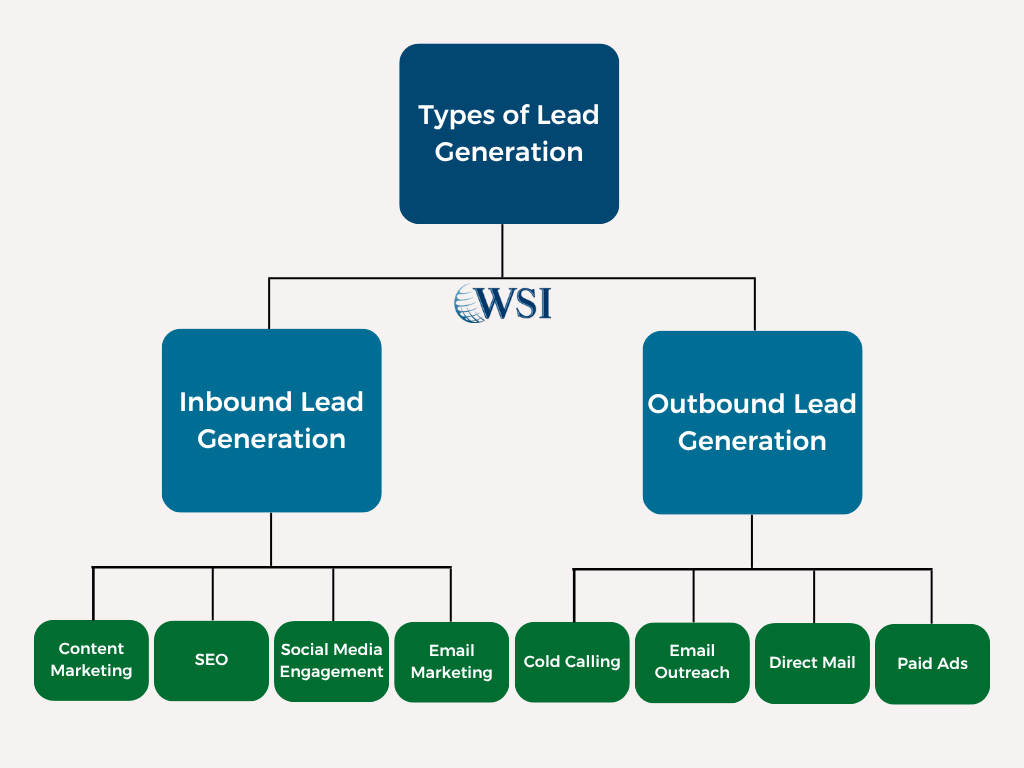
Inbound Lead Generation
Inbound lead generation focuses on attracting potential customers by providing valuable content and resources that address their needs or pain points. This approach relies on:
- Content marketing
- Search everywhere optimization (SEO)
- Social media engagement, and
- Email marketing to draw users in
By offering informative blog posts, e-books, webinars, and free tools, businesses encourage website visitors to share their email addresses in exchange for access to these resources. Inbound leads tend to have a higher conversion rate because they actively seek information related to the product or service.
Outbound Lead Generation
Outbound lead generation involves proactively reaching out to potential customers instead of waiting for them to express interest. This method includes:
- Cold calling
- Email outreach
- Direct mail, and
- Paid advertisements
While outbound lead generation can produce quicker results, it requires a well-crafted approach to avoid coming across as intrusive. A successful outbound strategy includes targeting the right audience and delivering relevant, compelling messages.
Why is Lead Generation so Important?
Successful lead generation is essential for business growth because it helps maintain a steady flow of potential customers. Without a continuous stream of leads, businesses struggle to generate revenue and expand their customer base. Effective lead generation ensures that sales teams have a pipeline of interested prospects to engage with, reducing reliance on cold outreach and increasing conversion rates. Additionally, it allows companies to build brand awareness, establish authority in their industry, and create long-term relationships with potential customers.
Sales Lead Generation Funnel
The sales lead generation funnel represents the stages a prospect goes through before converting into a customer. It is divided into three main sections:
TOFU (Top-of-the-Funnel)
This stage focuses on attracting a broad audience and generating awareness. Strategies include:
- Blog posts optimized for SEO
- Social media content to engage potential leads
- Video marketing to educate audiences
- Free resources like eBooks and guides
At this stage, prospects are learning about their problems and exploring potential solutions.
MOFU (Middle-of-the-Funnel)
At this stage, leads are evaluating different solutions. Businesses should provide content that nurtures their interest, such as:
- Case studies showcasing success stories
- Email campaigns with personalized recommendations
- Webinars offering in-depth insights
- Product comparisons to highlight benefits
MOFU content helps prospects move closer to making a purchasing decision.
BOFU (Bottom-of-the-Funnel)
At the BOFU stage, leads are ready to make a decision. Strategies to encourage conversion include:
- Free trials or demos to showcase product value
- Discounts or special offers to drive urgency
- Customer testimonials and reviews for credibility
- Sales consultations to address final objections
Businesses must provide strong incentives and clear CTAs to convert leads at this stage.
Different prospects need different types of information. Educational content works well for people discovering a problem, while case studies, demos, and consultations help prospects who are closer to making a decision.
- TOFU: Build awareness with blogs, videos, and guides
- MOFU: Nurture interest with emails, webinars, and case studies
- BOFU: Encourage action with demos, trials, and consultations
Lead Generation Techniques
Effective lead generation techniques include:
- SEO optimization to attract organic traffic
- Landing pages with strong CTAs to capture lead information
- Lead magnets such as free eBooks or webinars
- Paid advertising on Google and social media
- Influencer marketing to reach a wider audience
- Chatbots and AI tools for automated lead engagement
A mix of techniques ensures a steady flow of leads from multiple sources.
A campaign that generates 500 leads is not always better than one that generates 50. Focus on metrics such as:
- Cost per lead
- Lead quality
- Conversion rate
- Sales-qualified leads
- Revenue generated
These measurements help businesses understand which channels create real business opportunities.
Lead Generation Examples
Real-world lead generation examples include:
- HubSpot's free marketing tools to capture inbound leads
- LinkedIn’s InMail outreach campaigns for outbound lead generation
- Dropbox’s referral program encourages word-of-mouth growth
- Ecommerce brands offering discounts in exchange for email sign-ups
Successful companies combine inbound and outbound strategies for maximum results.
Lead Generation Strategies for B2C and B2B Businesses
Lead generation strategies for B2C and B2B businesses differ based on their target audience. B2C businesses can benefit from creative ideas like social media campaigns, engaging video content, and customer testimonials to generate high-quality leads. Optimizing SEO, utilizing content upgrades, and leveraging social media platforms are effective techniques.
For B2B businesses, providing valuable educational content, targeted email campaigns, and networking events is key. Building relationships with current customers, implementing content marketing strategies, and utilizing lead generation services can yield successful results. Both B2C and B2B businesses' lead generation can utilize optimization of their Google Business Profile, use custom templates, and implement offline and online lead generation ideas for business growth.
Effective Lead Generation Ideas to Try
Here are five B2C and B2B lead generation ideas (that work!) to try for your next marketing campaign:
1. Creating and Optimizing Lead Generation Landing Pages
Creating and optimizing a landing page for your next marketing campaign is an excellent way for you to generate valuable leads for your business. Understanding the importance of landing pages and everything that goes into making a good landing page will help your business drive better traffic to your website and generate higher lead conversion.
An effective landing page typically includes an attention-grabbing headline, a simple and straightforward copy of what is being offered, keywords that are optimized for search, hidden navigation, some sort of CTA (call-to-action), and a lead capture or conversion form. Bonus points for visual appeal!
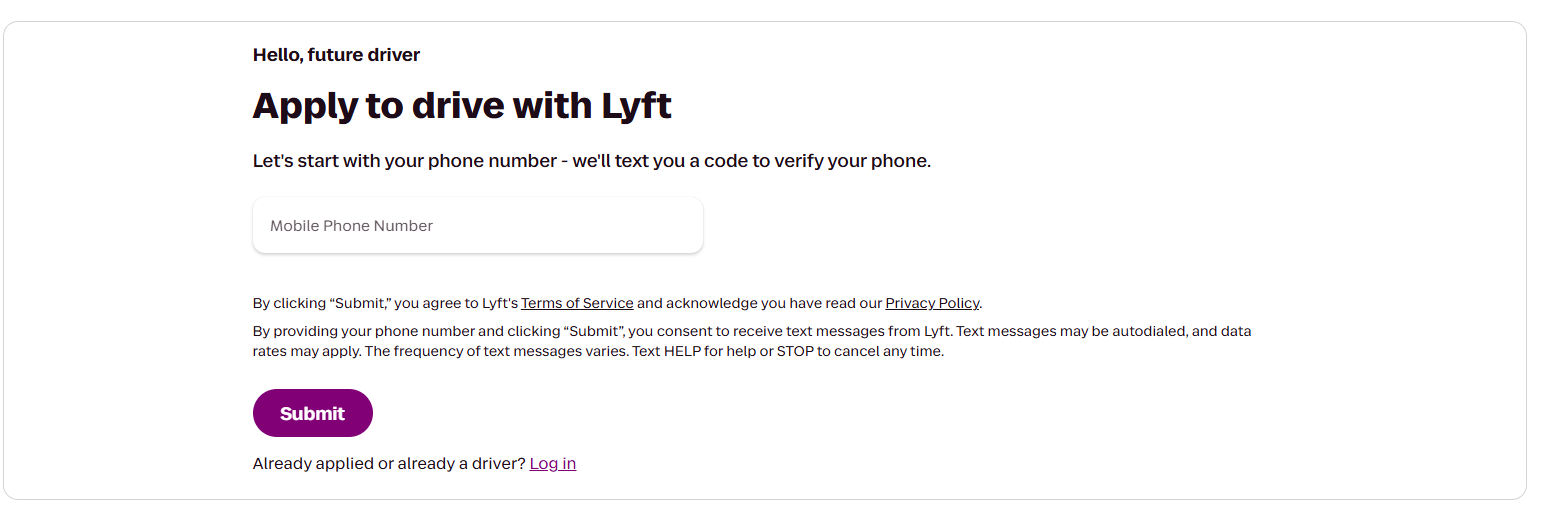
Take Lyft, for example. Its “Apply to drive with Lyft” landing page shows how a simple design can support lead generation. The page uses a clear headline, a short explanation of the next step, and a phone number form to capture potential driver leads.
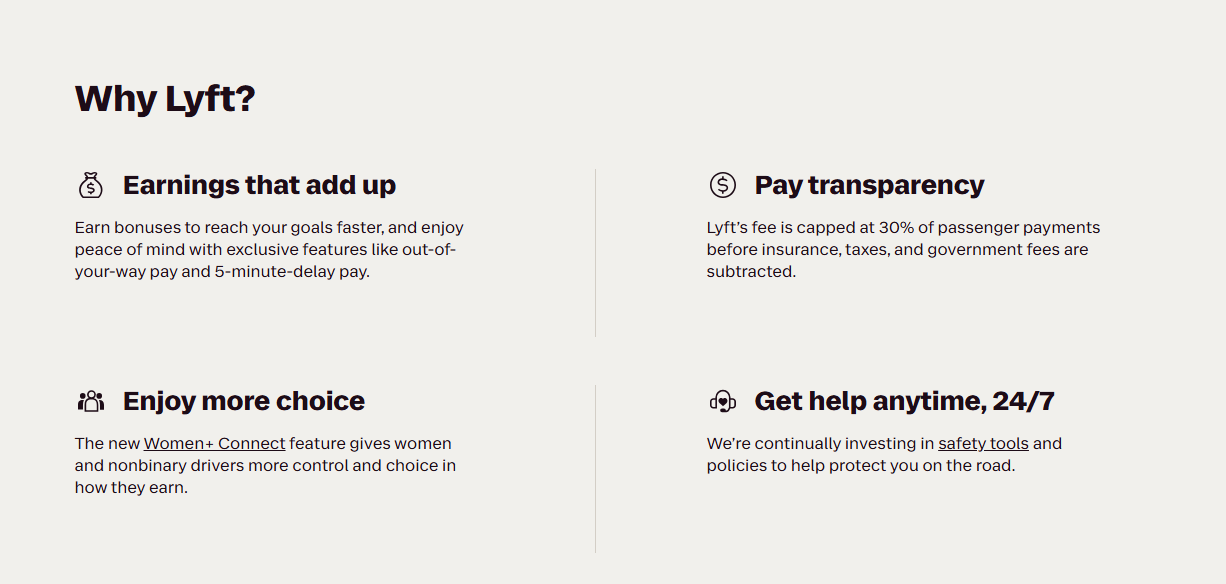
The page also highlights key benefits, including earning opportunities, pay transparency, driver choice, and 24/7 support. These sections help answer common questions and give visitors more reasons to complete the application.
Lyft keeps the conversion path focused with a clear “Submit” CTA and minimal distractions. This makes it easier for visitors to understand the offer, provide their information, and move forward in the signup process.
2. Email Marketing
Many businesses have already incorporated email marketing into their lead generation strategy. Still, there is always room to improve and find new ways to increase the number of inbound leads that come in from your email communication. For example, do your e-newsletters go out bi-weekly? Monthly? Consistent email communication helps build credibility and trust with your leads. So please take it to the next level this year and add a touch of personalization to your email marketing strategy!
Grammarly, for example, sends users weekly personalized emails that summarize their writing activity and progress. These emails include statistics on productivity, vocabulary, and writing performance, providing each recipient with content based on their own usage.

This type of personalization makes the email useful rather than purely promotional and gives users a reason to return to the product each week. Businesses can apply the same principle by segmenting their email lists and sending content based on a lead’s interests, activity, or stage in the buying process.
Successful email campaigns provide useful information based on the recipient’s interests, actions, or stage in the buying process. Segmenting your audience and sending relevant messages can improve engagement and help move leads closer to a purchase.
3. Gated Content
Providing gated content for your potential customers is another idea to consider to help with lead generation. For example, suppose your business has premium content such as software tools, resources, e-books, whitepapers, and webinars. In that case, you can easily incorporate it into your lead generation and inbound marketing strategy. This is a quick and easy way to exchange your content for a sales lead. Typically, visitors to your website will fill out a form to gain free access to your content. In return, you retain their contact information, and it becomes a sales lead for future conversion.
For example, Salesforce uses gated content as leverage for visitors who want access to their reports. As we see on the right, there is a form with a number of fields for visitors to fill out with an option to opt in to their marketing communications.
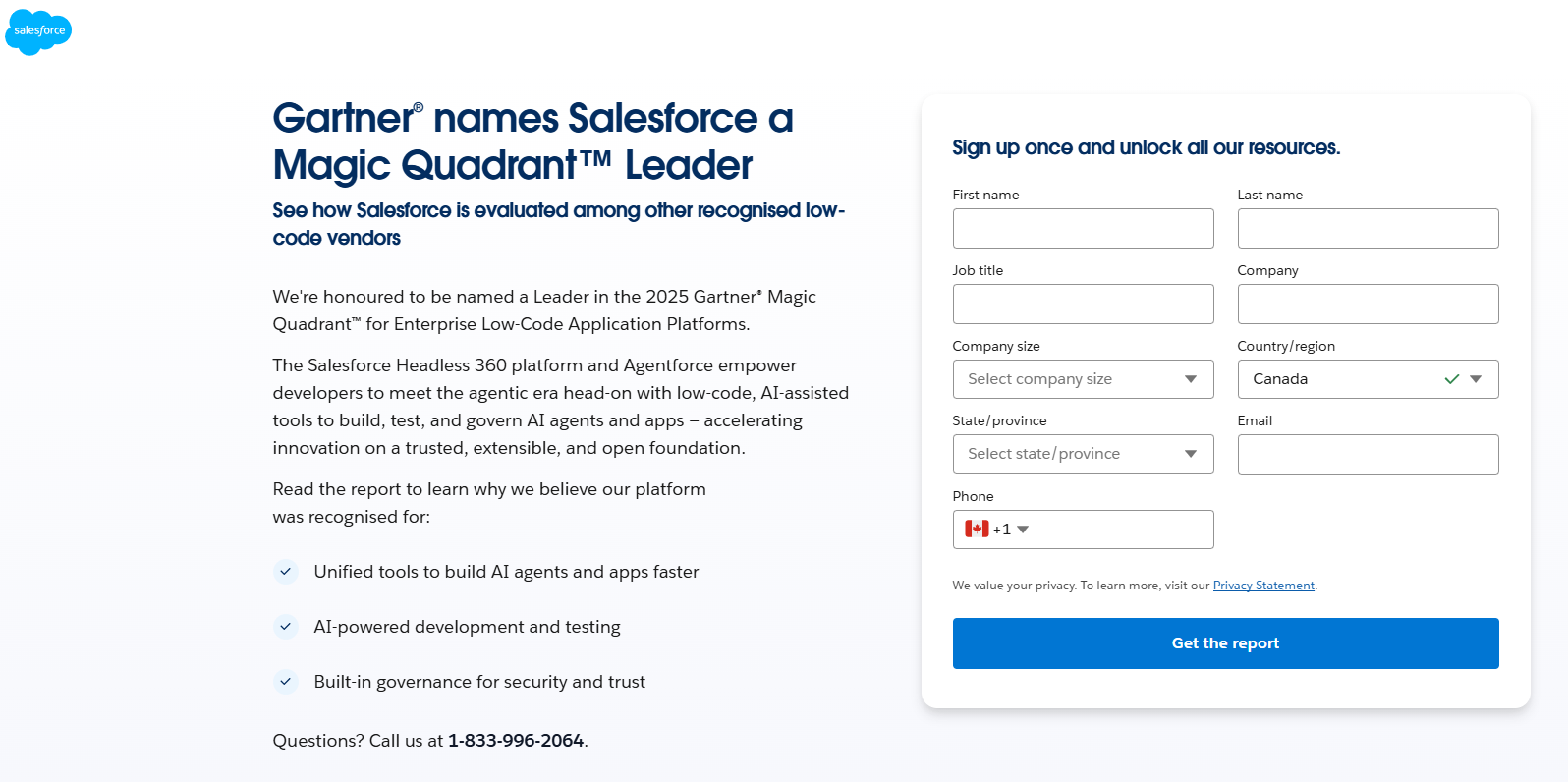
In this case, the quality of your leads will be better because those requesting access to your content show that they’re genuinely interested in what your business is about or what you have to offer. As a result, users are willing to become sales leads in exchange for the information or insight you have gathered.
4. Pay-Per-Click (PPC) Advertising
Google AdWords and Google’s Pay-Per-Click (PPC) advertising have been around for quite some time now, and they're more important now than ever before. If you’re not already using PPC advertising in your lead generation and marketing strategy, your next campaign may be a good time to start! PPC advertising is a highly cost-effective way to generate traffic to a landing page or a lead generation form.
In this scenario, businesses will set up custom ads when online users enter specific search queries. The wonderful thing about PPC advertising is that you don’t pay until someone clicks on your ad. An effective ad typically has a great headline that attracts readers’ attention, a clear and brief description of your product or service, and further incentives for your readers to click.
For example, Mesa Labs uses Google Ads alongside HubSpot to connect paid search activity with lead and customer data.

This helps the company focus its advertising budget on prospects who are more likely to become qualified leads. According to HubSpot, Mesa Labs reported a 43% increase in qualified leads, a 20% increase in conversion rates, and a 164% return on investment. The example shows why effective paid search goes beyond generating clicks. Businesses should also track which keywords, ads, and landing pages lead to qualified prospects and actual sales opportunities.
Paid search performance depends on more than choosing keywords and launching ads. Businesses should regularly review search terms, ad messaging, landing page performance, and conversion data to improve results and manage advertising costs.
5. Remarketing
Have you ever left a website and all of a sudden, its ads are following you for weeks on end wherever you go online? An example is when you visit an e-commerce store, add your items to your online shopping cart, and never carry through purchasing. Then, a few days later, you suddenly see ads for that same e-commerce store popping up on every other website you visit. That’s all thanks to remarketing! When someone visits your website and doesn’t convert into a lead, you can easily lure them back in with a bit of remarketing know-how.
According to Google, remarketing “allows you to strategically position your ads in front of audiences as they browse Google or its partner websites.” This helps increase brand awareness and keeps your brand top-of-mind when your previous visitors are browsing other sites. As a result, remarketing is a quick and effective way to remind those audiences to return to your website and make a purchase.
Common Lead Generation Challenges
Generating leads can be challenging because businesses need to reach the right audience, provide value, and guide prospects toward a purchase decision. Some common challenges include:
Attracting the Right Audience
Driving website traffic is not enough. Businesses need to attract visitors who have a genuine interest in their products or services. Poor audience targeting can result in many leads that do not convert into customers.
Generating High-Quality Leads
A large number of leads does not always mean better results. Businesses need processes that help identify qualified prospects based on factors such as their needs, budget, and buying intent.
Creating Content That Converts
Content plays an important role in lead generation, but businesses often struggle to create content that addresses customer questions and encourages action. Effective content should provide useful information while guiding prospects toward the next step.
Managing Lead Follow-Up
Many potential customers do not convert after their first interaction. Without a clear follow-up process, businesses may lose valuable opportunities. Email nurturing, timely outreach, and sales alignment can help move leads closer to a decision.
Measuring Campaign Performance
Understanding which channels generate the best results can be difficult. Businesses should track key metrics such as cost per lead, conversion rates, and lead quality to improve their marketing efforts over time.
Aligning Sales and Marketing Teams
Lead generation works best when sales and marketing teams share the same goals and understand what makes a qualified lead. Clear communication helps ensure that sales teams receive leads that are more likely to convert.
How to Qualify Leads
Lead qualification ensures sales teams focus on the most promising prospects, increasing efficiency and conversion rates. Businesses use different frameworks, like BANT (Budget, Authority, Need, and Timeline) or CHAMP (Challenges, Authority, Money, Prioritization), to assess leads. The qualification process involves gathering information through forms, phone calls, or email interactions to determine if a lead has the potential to become a paying customer. Key factors to consider include the lead’s level of interest, budget, decision-making power, and urgency. By properly qualifying leads, businesses can allocate resources effectively and maximize their sales opportunities.
Contact us for our Marketing Lead Generation Services
Approach this year with an open mind and never stop exploring new ways to improve your lead generation strategy. Implement and test out a few ideas we’ve discussed above and see how you can incorporate them into your next marketing campaign! Reach out to an expert at WSI today for more lead generation ideas and business success!
Successful lead generation requires regular testing and improvement. Customer needs, search behavior, and marketing channels change over time. Reviewing performance data helps businesses adjust campaigns and continue generating relevant leads.